IMDH
2026
2026
2026 International Conference on Intelligent Medicine and Digital Health
November 10-12, 2026
Leukerbad, Switzerland
IMDH 2026 2026 International Conference on Intelligent Medicine and Digital Health

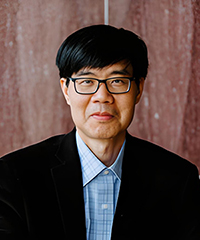
Xingen Lei is internationally known for his contribution to improving the nexus of sustainable animal agriculture, food security, nutrition and health, and environmental protection. He joined the Cornell faculty as an assistant professor in 1995, and was promoted to associate professor in 2000, full professor in 2006, and associate dean in 2023.
Lei's most creative and impactful research is the development of a new generation of bacterial phytases that are used in ~50 countries by the feed industry. His breakthroughs have received >70 domestic and international patents, greatly facilitated the wide application of phytases to replace inorganic phosphorus supplementation in diets for swine, poultry and fish, and led to a global reduction of phosphorus excretion from food animals by 30-50%.
Lei has acquired a substantial amount of grant support from federal and private sponsors for his research and has authored 264 publications (h-index, 74; citations >19,000). He is placed #5 as the highly ranked scholar-lifetime of selenium-dependent glutathione peroxidase research (in the top 0.05% of all scholars in the world, ScholarGPS@ScholarGPS.com).
In 2021, he was elected as a Fellow of the National Academy of Inventors for his breakthrough discoveries of phytase and impactful contribution to sustainable livestock.
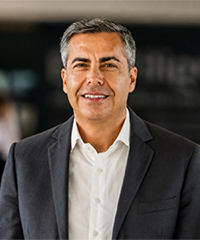
João Manuel R. S. Tavares graduated in Mechanical Engineering from the Universidade do Porto, Portugal, in 1992. He also obtained his M.Sc. degree and Ph.D. degree in Electrical and Computer Engineering from the same university in 1995 and 2001, respectively, and received his Habilitation in Mechanical Engineering in 2015. He is a senior researcher at the Institute of Science and Innovation in Mechanical and Industrial Engineering (INEGI) and a Full Professor at the Department of Mechanical Engineering (DEMec) of the Faculdade de Engenharia da Universidade do Porto (FEUP). Since June 2023, he has been serving as the Head of DEMec. João Tavares has made significant contributions to his field, serving as co-editor of over 90 books and co-authoring more than 50 book chapters and 650 articles in international and national journals and conferences. He also holds 3 international and 3 national patents. His editorial roles are extensive; he is a committee member for numerous international and national journals and conferences, co-founder and co-editor of the "Lecture Notes in Computational Vision and Biomechanics" series published by Springer, founder and Editor-in-Chief of "Computer Methods in Biomechanics and Biomedical Engineering: Imaging & Visualization" published by Taylor & Francis, and Editor-in-Chief of "Computer Methods in Biomechanics and Biomedical Engineering," also published by Taylor & Francis. Furthermore, he is a co-founder and co-chair of several international conference series, including the International Symposium on Computational Modeling of Objects Presented in Images, the ECCOMAS Thematic Conference on Computational Vision and Medical Image Processing, the International Conference on Computational and Experimental Biomedical Sciences, and the International Conference on Biodental Engineering. João Tavares has also (co-)supervised numerous MSc and PhD theses and supervised several post-doctoral projects, participating in many scientific projects as both a researcher and scientific coordinator.
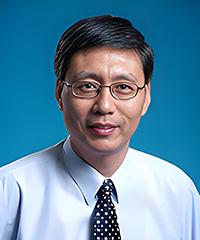
Prof. Yu received his undergraduate education at the Henan University of Traditional Chinese Medicine, and obtained his PhD degree in biochemistry from the Hong Kong University of Science and Technology. Before joining the Hong Kong Baptist University, Prof. Yu once worked at China Pharmaceutical University, Nagasaki University, Hong Kong University of Science and Technology, Xiamen University and University of Macau. Prof. Yu is known for his research in herbal pharmacology, and in processing of Chinese medicinal materials. He has published more than 200 peer-reviewed research papers. Consun Pharmaceutical Group Limited and Laboratory JaneClare Limited in collaboration with Prof. Yu's team established "Consun Chinese Medicines Research Centre for Renal Diseases" and "JaneClare Transdermal TCM Therapy Laboratory", respectively, in Hong Kong Baptist University. Prof. Yu serves as Editorial Board Member/Associate Editor/Executive Editor/ Consulting Editor for more than 30 journals, such as LiShizhen Medicine and Materia Medica Research, BMC Complementary Medicine and Therapies, Current Topics in Nutraceutical Research, Journal of Alternative, Complementary & Integrative Medicine, Pharmacological Research.
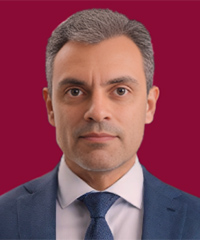
Pier Paolo Piccaluga is an Associate Professor of Pathology at the Department of Medical and Surgical Sciences at the Bologna University School of Medicine. He is also a co-founder and Executive Physician at the Biobank of Research, IRCCS S. Orsola-Malpighi Hospital in Italy. He has led the Molecular Hematopathology Laboratory for many years. In 2018, he was appointed to teach at Queen Mary University of London (UK) and Jomo Kenyatta University of Agriculture and Technology in Nairobi (Kenya), and since 2023, at the University of Nairobi and the University of Botswana. He is the author of several international publications indexed in the Current Contents (including Nature Medicine, Journal of Clinical Investigation, Journal of Experimental Medicine, Journal of Clinical Oncology, Blood, Lancet Oncology, and Lancet Infectious Diseases, with a total impact factor >1,000, a mean impact factor >6, and an H-index of 62 (ranked among the VIA-Academy Top Italian Scientists). He is the author of several presentations at national and international conferences. Dr. Piccaluga has participated in several clinical trials as a coordinator or sub-investigator and has won multiple awards for his contributions to study and research. He has served as a Principal Investigator (PI) in various research projects funded by nationally and internationally recognized organizations. He is the Editor-in-Chief of the World Journal of Hematology, Digital Medicine and Healthcare Technology, Advances in Precision Medicine, and the Journal of Cancer Biomoleculars and Therapeutics.
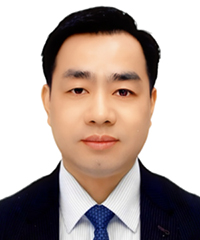
Rong Xu is a Professor at Suzhou Institute of Biomedical Engineering and Technology, Chinese Academy of Sciences, China and the University of Science and Technology of China. He is a National‑level High‑level Talent, Distinguished Expert of the Special‑expert Committee of the All‑China Federation of Returned Overseas Chinese, and Visiting Researcher at Waseda University. His research focuses on cutting‑edge exploration and systematic development of three major fields: intelligent medical image analysis, surgical navigation systems, and brain‑computer interface technologies. He is committed to building an integrated interdisciplinary research framework of “intelligent image interpretation — intraoperative precise navigation — neural signal decoding and modulation”, to advance emerging research directions including large‑scale medical imaging models, precise interventional navigation, and closed‑loop neural engineering. Dr. Xu received his Ph.D. in Information Science from Waseda University, Japan. With nearly two decades of research in intelligent image recognition and understanding, his work covers complex scenarios such as medical imaging, industrial imagery and multimedia images. He has worked for multiple Fortune Global 500 companies, serving as a Researcher at KDDI Research, Japan, and Senior Researcher in the AI Division of Yazaki Corporation. He boasts extensive experience in industrial R&D and research translation. He has published more than 60 academic papers in artificial intelligence, medical image analysis, intelligent image recognition and other fields, and holds 6 authorized Japanese invention patents.
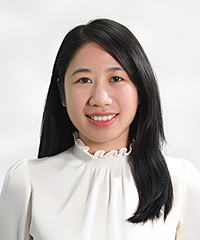
Dr. Haibo Wang is a professor in Hangzhou Institute of Medicine (HIM), Chinese Academy of Sciences and the deputy director of the Intelligent Molecular Diagnosis Research Center of HIM. She received her BSc in Chemistry from Sun Yat-sen University (with Prof. Zongwan Mao) and PhD in Bioinorganic Chemistry from the University of Hong Kong (with Prof. Hongzhe Sun). Her PhD thesis focused on using metalloproteomics and metallomics approaches to uncover the mode-of-action of metal-based antimicrobial agents. She continued the research in HKU as a postdoctoral fellow on medicinal structure biology from 2018 to 2020. After another two years' experience of research scientist in University of Zurich, Switzerland, with Prof. Roland K.O. Sigel. She joined HIM as an independent group leader since early of 2023. Her research group is aiming to integrate wet lab (including chemical biology, structure biology, medicinal chemistry, multi-omics etc) and dry lab (including bioinformatics, virtual screening, molecular modeling and machine learning) to achieve early diagnosis and better treatment of cancer and infectious diseases. Dr. Haibo Wang has published 23 papers in Nature Machine Intelligence, Nature Communications, PNAS, Chemical Science, CCS Chemistry, PloS Biology and Chemical Society Reviews and other top-tier journals. She received many awards, including Overseas Young Talent Scheme in 2023, the special prize CAIA award in 2021, the Best Young Scientist Award etc. Dr. Haibo Wang also served as the guest editor of Frontiers in Chemistry.
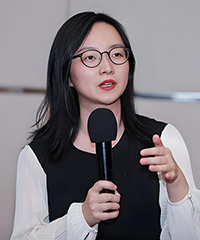
Dr. Ling Tao is a Principal Investigator at School of Public Health, Fudan University, China, and a recipient of Shanghai Overseas High-level Talent Program. She earned her Bachelor's degree from Nanjing Agricultural University, Master's degree from Seoul National University, and Ph.D. from The Pennsylvania State University. She worked as an Instructor at Baylor College of Medicine before joining Fudan University in August 2022. She holds multiple academic positions, including Deputy Group Leader of the Pediatric Tumor Nutrition Expert Collaborative Group under the Chinese Anti-Cancer Association, Committee Member of Nutrition and Immunology Branch of Chinese Nutrition Society. Dr. Tao has published over 20 peer-reviewed papers in top journals including Nature Communications, Advanced Science and Nucleic Acids Research, many highlighted as featured articles and covered by global science media.
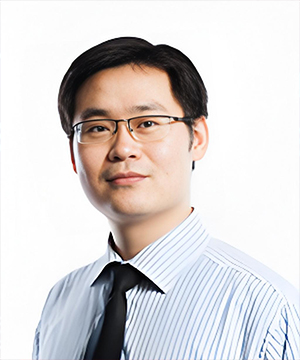
Zefeng Wang, Distinguished Professor and Doctoral Supervisor of Huzhou Normal University, Director of the Institute of Perception and Control Technology, College of Information Engineering, Huzhou Normal University. He successively obtained a Bachelor's degree in applied Physics, a Master's degree in mechanical and Systems Engineering, and a Doctor's degree in mechanics, electronics, acoustics and robotics from Université Paris VI. After that, he served as an Associate Professor at the Catholic University of Paris. He moved to China in 2017 as a Distinguished Professor and concurrently served as a Guest Professor at JUNIA Grande école d'ingénieurs. At the end of 2020, he joined Huzhou Normal University as a Distinguished Professor and jointly trained doctoral students with Sorbonne University and Lille University.