IMDH
2026
2026
2026 International Conference on Intelligent Medicine and Digital Health
November 10-12, 2026
Leukerbad, Switzerland
IMDH 2026 2026 International Conference on Intelligent Medicine and Digital Health

General Chair
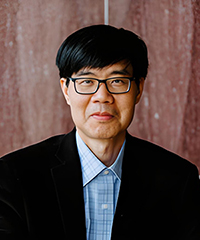
Xingen Lei
Fellow, National Academy oflnventors, Professor, Cornell University and Associate Dean, Ofice of Research and innovation, USA.
Research Focuses: Role and mechanism of selenium, selenoproteins, and other antioxidant enzymes in diabetes, obesity, and fatty liver; Protein engineering of novel hydrolytic enzymes for feed and food applications; Development of alternative feed and food proteins (feather, microalgae, hempseed, insect); Biofortification of staples and animal foods with micro and bioactive nutrients.
Xingen Lei is internationally known for his contribution to improving the nexus of sustainable animal agriculture, food security, nutrition and health, and environmental protection. He joined the Cornell faculty as an assistant professor in 1995, and was promoted to associate professor in 2000, full professor in 2006, and associate dean in 2023.
Lei's most creative and impactful research is the development of a new generation of bacterial phytases that are used in ~50 countries by the feed industry. His breakthroughs have received >70 domestic and international patents, greatly facilitated the wide application of phytases to replace inorganic phosphorus supplementation in diets for swine, poultry and fish, and led to a global reduction of phosphorus excretion from food animals by 30-50%.
Lei has acquired a substantial amount of grant support from federal and private sponsors for his research and has authored 264 publications (h-index, 74; citations >19,000). He is placed #5 as the highly ranked scholar-lifetime of selenium-dependent glutathione peroxidase research (in the top 0.05% of all scholars in the world, ScholarGPS@ScholarGPS.com).
In 2021, he was elected as a Fellow of the National Academy of Inventors for his breakthrough discoveries of phytase and impactful contribution to sustainable livestock.
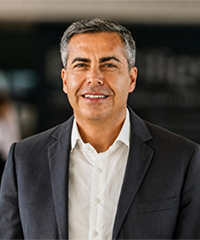
João Manuel R. S. Tavares
Professor, Universidade do Porto, Portugal.
Research Focuses: Computational Vision, Medical Imaging, Biomechanics, Biomedical Engineering.
João Manuel R. S. Tavares graduated in Mechanical Engineering from the Universidade do Porto, Portugal, in 1992. He also obtained his M.Sc. degree and Ph.D. degree in Electrical and Computer Engineering from the same university in 1995 and 2001, respectively, and received his Habilitation in Mechanical Engineering in 2015. He is a senior researcher at the Institute of Science and Innovation in Mechanical and Industrial Engineering (INEGI) and a Full Professor at the Department of Mechanical Engineering (DEMec) of the Faculdade de Engenharia da Universidade do Porto (FEUP). Since June 2023, he has been serving as the Head of DEMec. João Tavares has made significant contributions to his field, serving as co-editor of over 90 books and co-authoring more than 50 book chapters and 650 articles in international and national journals and conferences. He also holds 3 international and 3 national patents. His editorial roles are extensive; he is a committee member for numerous international and national journals and conferences, co-founder and co-editor of the "Lecture Notes in Computational Vision and Biomechanics" series published by Springer, founder and Editor-in-Chief of "Computer Methods in Biomechanics and Biomedical Engineering: Imaging & Visualization" published by Taylor & Francis, and Editor-in-Chief of "Computer Methods in Biomechanics and Biomedical Engineering," also published by Taylor & Francis. Furthermore, he is a co-founder and co-chair of several international conference series, including the International Symposium on Computational Modeling of Objects Presented in Images, the ECCOMAS Thematic Conference on Computational Vision and Medical Image Processing, the International Conference on Computational and Experimental Biomedical Sciences, and the International Conference on Biodental Engineering. João Tavares has also (co-)supervised numerous MSc and PhD theses and supervised several post-doctoral projects, participating in many scientific projects as both a researcher and scientific coordinator.
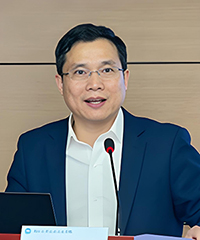
Jianlin Lou
Vice President of Huzhou Normal University, China.
Research Focuses:
Jianlin Lou, PhD, Research Fellow, Visiting Scholar at Harvard University. He is currently Vice President and Member of the Party Committee of Huzhou Normal University. His main research focuses on the screening, validation and functional study of biomarkers. He serves as Standing Committee Member of the Committee on Occupational Health and Occupational Diseases, Chinese Preventive Medicine Association, Chairperson of the Committee on Occupational Health and Occupational Diseases, Zhejiang Preventive Medicine Association, reviewer for projects including the National Key R&D Program of China, and reviewer for more than 20 journals. He has presided over a number of research projects such as the National Key R&D Program of China and National Natural Science Foundation of China. He has published over 160 papers in prestigious journals including Environment International. He has won one provincial and ministerial second-class award and obtained 6 national invention patents. He has been selected into talent programs including Zhejiang University Innovative Leading Talent and Zhejiang 151 Talent Project.
Organizing Committee Chair
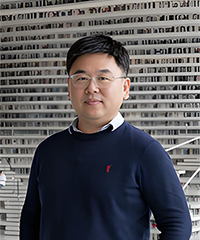
Lei Chen
Vice President, International Deep Spotlight Society, Switzerland; Former Researcher, KU Leuven, Belgium.
Research Focuses: medical imaging navigation and organoid construction, Egg Life Sciences and Bio-pharmaceuticals, High-value development and medical applications of protein resources.
Lei Chen is Vice President of International Deep Spotlight Society (Switzerland) and Senior Researcher at KU Leuven, Belgium. He holds a PhD in Biological and Biomedical Sciences from KU Leuven, alongside postgraduate advanced food technology studies at Ghent University & KU Leuven, an MSc in Environmental Science from University of Greenwich, and a Bachelor's degree in Food Science and Engineering from Ocean University of China. He boasts over 25 years of cross-regional experience spanning governmental quality supervision, international organic food trade, food production quality management, corporate R&D leadership and academic life science research across China, the Netherlands, Belgium, Luxembourg and Switzerland. He worked as quality & production supervisor and R&D Manager at BELOVO SA & BNLfood Group, and R&D Director of DMF Co., Ltd. in Luxembourg for 10 years, where he specialized in the full industrial chain development and application of bio-active compounds. Since September 2023, he has undertaken fundamental and translational research as a Senior Researcher at KU Leuven. In his concurrent role as association vice president, he bridges European academic institutions, biotech enterprises and Chinese food & life science industries to facilitate cross-continental scientific exchange, joint R&D and industrial transformation of bioactive substance technologies.
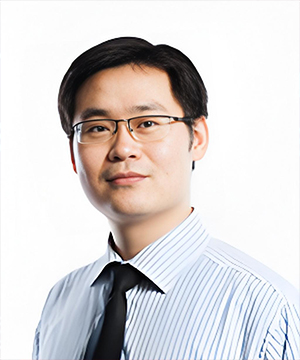
Zefeng Wang
Professor, Huzhou Normal University, China.
Research Focuses: Smart Medical Care (Including Rehabilitation Robots, Early Screening of Mental Disorders based on AI, Medical Big Data Analysis, etc.), Special Robots (Including Land Mobile Robots, Aircraft, Underwater Robot Clusters, etc.).
Zefeng Wang, Distinguished Professor and Doctoral Supervisor of Huzhou Normal University, Director of the Institute of Perception and Control Technology, College of Information Engineering, Huzhou Normal University. He successively obtained a Bachelor's degree in applied Physics, a Master's degree in mechanical and Systems Engineering, and a Doctor's degree in mechanics, electronics, acoustics and robotics from Université Paris VI. After that, he served as an Associate Professor at the Catholic University of Paris. He moved to China in 2017 as a Distinguished Professor and concurrently served as a Guest Professor at JUNIA Grande école d'ingénieurs. At the end of 2020, he joined Huzhou Normal University as a Distinguished Professor and jointly trained doctoral students with Sorbonne University and Lille University.
Organizing Committee Member
Kunfeng Song, the Third People's Hospital of Henan Province, China
Muhammad Attique khan, Prince Mohammad Bin Fahd University, Saudi Arabia
Omkar Singh Kushwaha, Indian Institute of Technology, India
Shanshan Deng, International Deep Spotlight Society; Edelweiss Innovation, Switzerland & Intelligence Institute (EIII), Switzerland
Yuanbo Feng, International Deep Spotlight Society, Switzerland; KU Leuven, Belgium
Zhihui Li, Interlit GmbH, Germany; ETH Student Project House, Switzerland